
Aleutian Cleveland volcano shows signs of impending eruption
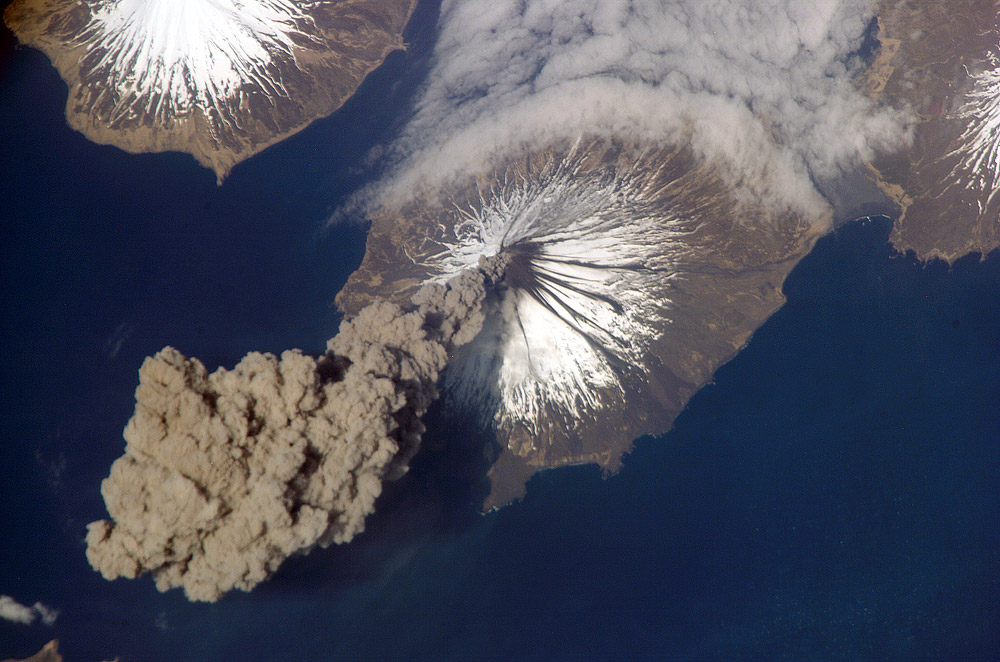
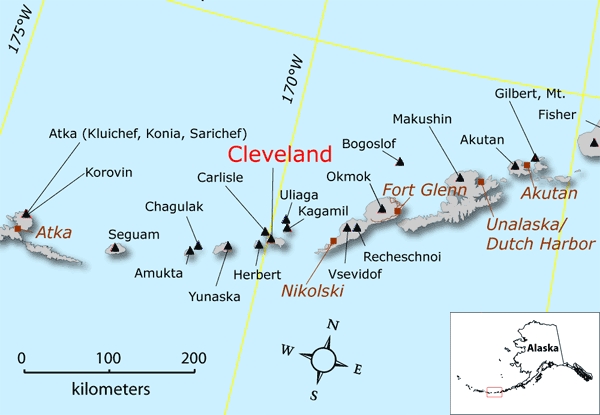
Recent satellite images of a remote Alaska volcano along a flight route for major airlines show the mountain may be poised for its first big eruption in 10 years, scientists said on Thursday. The Alaska Volcano Observatory has issued an eruption advisory for the 5,676 foot-tall Cleveland Volcano, located on the uninhabited island of Chuginadak in the Aleutian chain about 940 miles southwest of Anchorage.
The advisory was based on “thermal anomalies” detected by satellite. Those measurements indicate the volcano could erupt at any moment, spewing ash clouds up to 20,000 feet above sea level with little further warning, the observatory said.
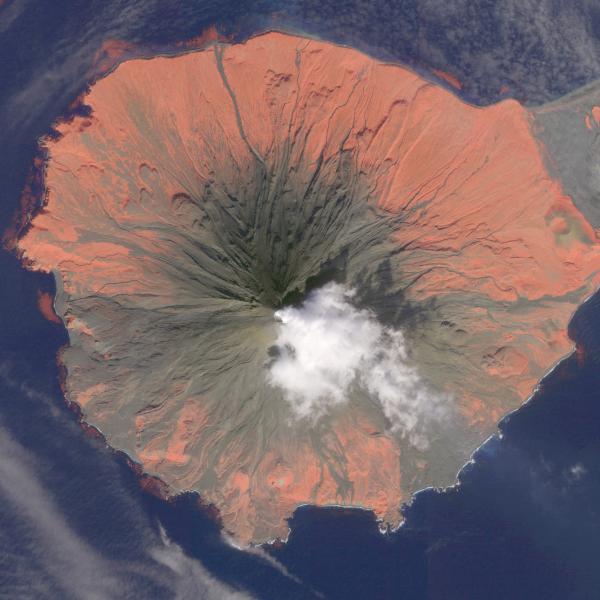
A major eruption could disrupt international air travel because Cleveland Volcano, like others in the Aleutians, lies directly below the commercial airline flight path between North America and Asia. The volcano’s last major eruption came in 2001, when it blasted ash more than 5 miles into the sky and spilled lava from the summit crater. Cleveland has experienced several smaller eruptions or suspected eruptions since then.
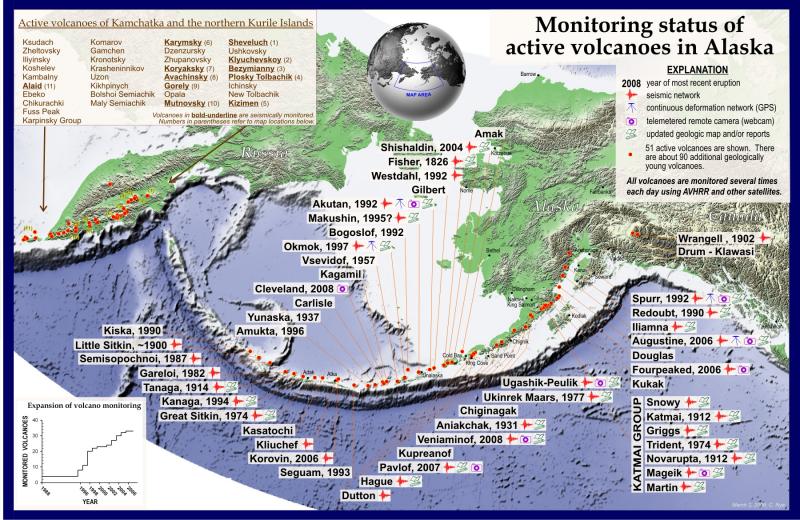
Scientists are not always certain about what is happening at the remote volcano, observatory officials said. The town of Nikolski, the nearest settlement to Cleveland Volcano, is 45 miles away. Although Cleveland is among the most active of Alaska’s roughly 90 volcanoes, no seismic equipment is set up there because the costs of working in such a remote area are prohibitive.
Without sophisticated monitors like those used to keep tabs on volcanoes closer to Anchorage and other populated areas, scientists must rely on a variety of other observations to track Cleveland’s eruptions. Those include satellite data, eyewitness reports and video from mariners and pilots in the area.
The Alaska Volcano Observatory—Expanded Monitoring of Volcanoes Yields Results

Thomas,
You’re kidding, right?
Where do you think mass mined from the earth’s surface goes after it’s dug out? Space? (Actually, some estimate the amount of INCREASE in the earth’s mass due to settling of space dust – a net increase in earth’s mass – is on the order of 40,000 tons per year.)
In the entire history of the earth, how much mass do you think mankind has moved? Bear in mind that the diameter of the earth is about 8,000 miles and that the deepest mines in the world are less than 3 miles deep. Assuming uniform mass, if we somehow magically removed the entire earth’s crust to a depth of 3 miles, it would constitute less than a quarter of 1% of the earth’s total mass. To put this to scale, if you had an apple that was 3 inches in diameter, 0.25% would represent about HALF the thickness of the skin.
If we wiped out 90% of all humans, we’d still have more people than existed on the entire planet in 1650. Some might argue that would be a good thing. Wiping out half would only take us back as far as the population levels of the late 1960s. In either case, I don’t think repopulating the earth would be a problem.
hello folk’s
listen i don’t know if unsolicited advice is embraced though it is the beggining of the twenty first century
the tech tonic fluctuation as a result of planatarey position or disposition
the significant issue should be
what ever happened in 1700 ,1800. 1900, 2000 etc
will reveal as bad or worse consequences
the mining of hundreds of thousands of metric tons is not something that weighs in mans favor less planatrey mass means increased plate technonic impact
we should be looking at where the next in land sea or mountain range will appear
its time to seriously consider relocating at least one third of the global population
while we still have a chance
there’s only 7 billion people or so on the planet and if something were to happen at least 2/3 must survive or man can’t repopulate as effeciently
it may take another millenia before the human species could compete again
the cumebre viaehagh volcano is an issue for the east coast
the collapse of the three georges dam in china is a danger to the west coast
the canarey island volcano is going to affect seafood costs for years
also the cleavland volcano in the elushins
if the U.S. doesn’t think quick we could be the next Sendiagh