
Phobos-Grunt reentry – A quick guide for skywatchers
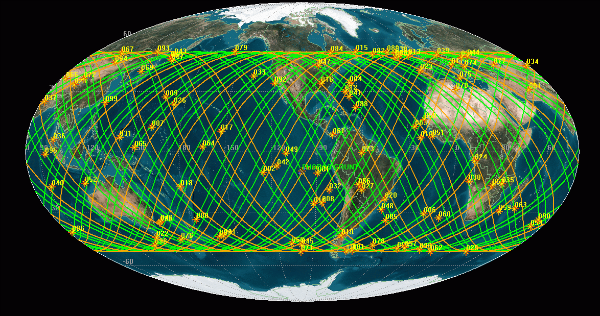
Before you start to use any of satellite tracking applications make sure that the computer clock is correct and the time zone is compatible with your Region. The latest Phobos-Grunt orbit data is here. Below are some important data.
USSPACECOM Catalog No.: 37872
International Designation Code: 2011-065-A
Launch Date: 2011-11-08
Launch Vehicle: Zenit
Launch Site: Tyuratam (Baikonur Cosmodrome), Kazakhstan
Mass: 730.0 kg
Nominal Power: 150.0 W
Intrinsic brightness (Mag): 4.5 (at 1000km distance, 50% illuminated)
Maximum brightness (Mag): -3.8 (at perigee, 100% illuminated)
The orbit data is extracted from the following two-line orbital elements (TLE):
1 37872U 11065A 12013.87144717 .01576755 12450-4 65173-4 0 3011
2 37872 051.4148 000.5559 0020257 313.6808 046.2171 16.41416268 10664
|
Re-entry Estimates – all dates/times are UTC
|
||
|
2012 Jan 16, 07:00 ± 36 hrs
|
Issued 2012 Jan 9, 03:48
|
Seesat-L (Ted Molczan)
|
|
2012 Jan 15, 11:10 ± 10 hrs
|
Issued 2012 Jan 9, 16:00
|
Seesat-l (Harro Zimmer)
|
|
2012 Jan 16, 07:00 ± 32 hrs
|
Issued 2012 Jan 10, 06:34
|
Seesat-L (Ted Molczan)
|
|
2012 Jan 16, 08:30 ± 36 hrs
|
Issued 2012 Jan 10, 09:23
|
Aerospace CORDS
|
|
2012 Jan 15, 14:36 ± 72 hrs
|
Issued 2012 Jan 10, 21:20
|
Spacetrack (TIP)
|
|
2012 Jan 16, 18:00 ± 24 hrs
|
Issued 2012 Jan 11, 04:21
|
Seesat-L (Ted Molczan)
|
|
2012 Jan 15, 09:18 ± 36 hours
|
Issued 2012 Jan 11, 06:00
|
Roscosmos
|
|
2012 Jan 16, 02:36 ± 18 hrs
|
Issued 2012 Jan 11, 08:52
|
Aerospace CORDS
|
|
2012 Jan 15
|
Issued 2012 Jan 11
|
Spacetrack (60 day)
|
|
2012 Jan 15, 17:57 ± 20 hrs
|
Issued 2012 Jan 12, 08:20
|
Aerospace CORDS
|
|
2012 Jan 15, 12:00 ± 3 hrs
|
Issued 2012 Jan 12, 17:00
|
Seesat-L (Harro Zimmer)
|
|
2012 Jan 15, 17:09 ± 14.5 hrs
|
Issued 2012 Jan 12, 18:36
|
Spacetrack (TIP)
|
|
2012 Jan 15, 17:52 ± 504 min
|
Issued 2012 Jan 13, 10:40
|
Aerospace CORDS
|
|
2012 Jan 15, 17:05 ± 3 hrs
|
Issued 2012 Jan 13, 11:30
|
Seesat-L (Harro Zimmer)
|
|
2012 Jan 15, 16:22
|
Issued 2012 Jan 13
|
Roscosmos
|
|
2012 Jan 15, 17:34 ± 9 hrs
|
Issued 2012 Jan 13, 15:30
|
Spacetrack (TIP)
|
|
2012 Jan 15, 18:01 ± 8.5 hrs
|
Issued 2012 Jan 13, 15:30
|
Spacetrack (TIP) – correction?
|
|
2012 Jan 15, 17:51
|
Issued 2012 Jan 14, 06:00
|
Roscosmos
|
Here are some satellite tracking applications in real-time:
If you want to track Phobos-Grunt reentry on your Smartphone you can use this applications:
You may also download an interactive simulation of the PHOBOS-GRUNT re-entry scenario, which uses the free AGI Viewer software to allow you to explore the latest reentry prediction in more detail.
PHOBOS-GRUNT Re-entry Interactive Simulation
Featured image credit: AGI

Commenting rules and guidelines
We value the thoughts and opinions of our readers and welcome healthy discussions on our website. In order to maintain a respectful and positive community, we ask that all commenters follow these rules.