
Coastal erosion caused by rising sea level is greater than previously thought
The anticipated rise in sea levels due to climate change will result in coastlines receding worldwide through erosion. Rising sea level inundates low-lying areas, converts wetlands to open water, erodes beaches, exacerbates flooding, and increases the salinity of estuaries and aquifers. The effects of coastline erosion as a result of rising sea-level rise in the vicinity of inlets, such as river estuaries, lagoons or river mouths, have until now been dramatically underestimated. Other factors like changes in rainfall or certain compensating effects like basin infilling can also affect coastlines in the vicinity of inlets.
Most coastlines around the world are interrupted by inlets connecting the ocean to estuaries, lagoons and rivers. Some 32,000 lagoons are reported along 13% of the world’s coastline. The total number of inlets in the world has not yet been quantified but is likely to run into thousands. Coastlines in the vicinity of inlets will not only be affected by climate change-driven variations in oceanic processes but also by climate change-driven variations in terrestrial processes like rainfall and runoff. Furthermore, coastal zones in the vicinity of inlets are commonly subjected to heavy human utilization (navigation, fishing and recreation). The combination of their sensitivity to multiple climate change-driven variations in system forcing and their heavy human utilisation renders inlet-interrupted coasts highly vulnerable to climate change impacts.
When trying to calculate coastline’s future development researchers faced a problem of missing a model that takes all these effects into account. A demand for this existed also among engineers, coastal managers and planners. Now, a new model was developed by scientist Rosh Ranasinghe, employed as associate professor at TU Delft and at UNESCO-IHE, along with researchers of the faculty of Civil Engineering and Geosciences at TU Delft, UNESCO-IHE and knowledge institution Deltares. The scientists have published their research in the online edition of Nature Climate Change.
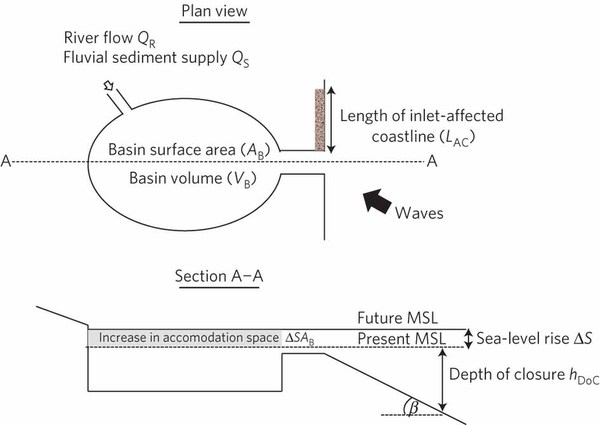
New model allows researchers to produce much more accurate prognosis of coastline erosion due to rising sea levels. Coastal erosion can be calculated and predicted based on a given sea-level rise, by means of the so-called Bruun effect. With the model, it is possible to make accurate predictions quickly – within a few minutes – of how the coastline will develop in the vicinity of inlets as a result of rising sea-levels.
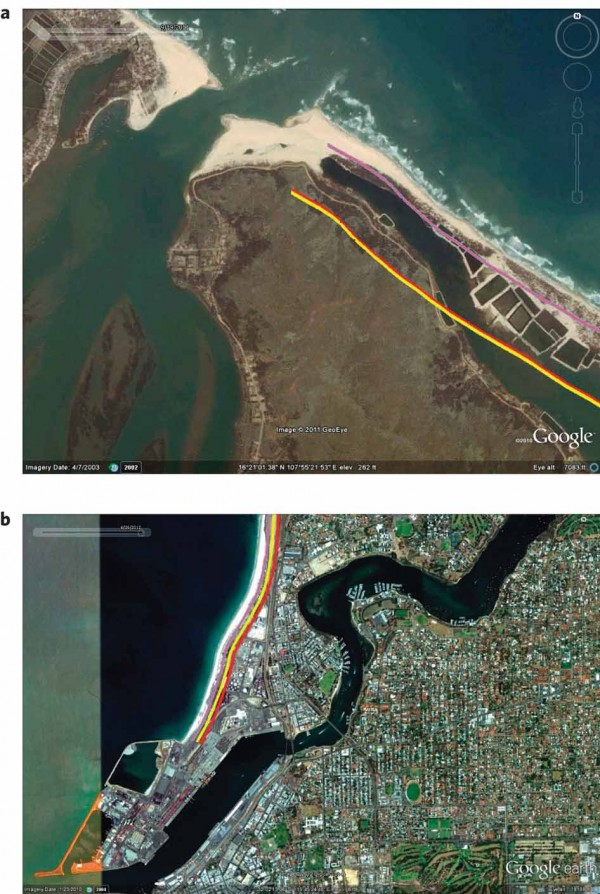
The new model was in turn applied to four different and representative coastal areas (in Vietnam and Australia). The research showed that only 25 to 50 % of anticipated coastline change in these areas can be predicted using the Bruun effect. The other processes that occur in the vicinity of inlets are of at least equal importance and coastline change in these areas as a result of rising sea levels has until now been strongly underestimated.
Coastal management projects will be able to benefit from this model by making a valuable contribution to coastal management and planning in practice. New model will provide rapid assessments of coastline change adjacent to small inlet-estuary/lagoon systems due to the combined effect of climate change-driven sea level rise and variations in rainfall and runoff.
‘Climate-change impact assessment for inlet-interrupted coastlines’ Roshanka Ranasinghe(1,2,3*), Trang Minh Duong (1,3), Stefan Uhlenbrook (1,2), Dano Roelvink (1,2) and Marcel Stive (2); 1 UNESCO-IHE, Department of Water Engineering; 2 TU Delft, faculteit Civiele Techniek en Geowetenschappen; 3 Deltares, Harbour, Coastal and Offshore Engineering DOI: 10.1038/nclimate1664
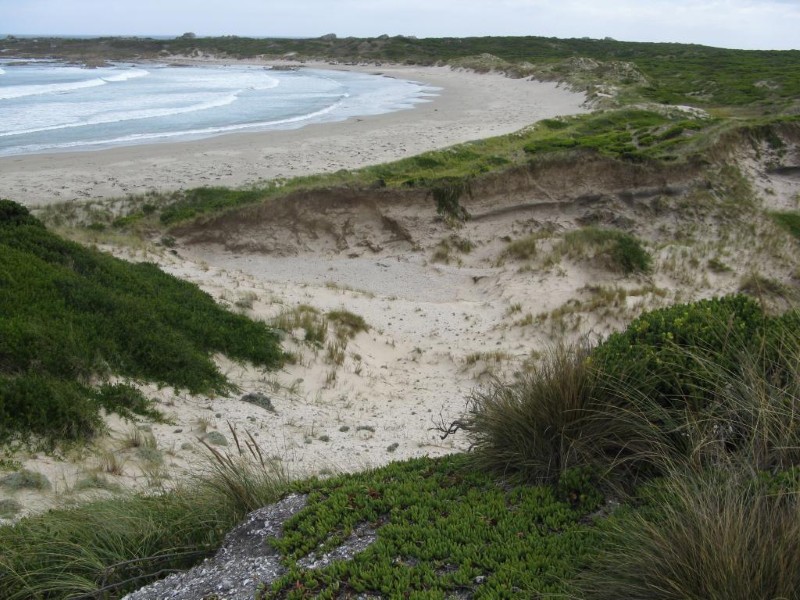
Featured image: Midden blow-out, West Coast, Tasmania

hii guys
Hi! 🙂
Here in Louisiana they’re trying to stop the Gulf of Mexico with tied-up bundles of sticks and old dead trees. Whatever–they could cut down the Kisatchie Nat’l Forest and it wouldn’t matter. Louisiana’s tradition of ignoring the truth and long-standing problems goes on.
Better start building massive seawalls around the major coastal cities or begin moving millions to higher ground. The implications both politically and socially haven’t even begun to be contemplated. The effects of global climate change on sea level rise will change the face of the earth. With the current state of consciousness of those with the power to actually make an effective effort to combat further warming of the planet not motivated to do so its likely humankind will see massive shifts in populations along with their associated destabilizing effects on civilization. Huge change is about to occur at an ever escalating rate. And unfortunately, or fortunately depending on your perspective, those in power continue to fiddle about trying to maintain the status quo. Ah to be born in interesting times.